Cisco Web Applicaton
(Case Study)
Understand UX problem statement
Designed end-to-end workflows
AS Estimator is a web-based enterprise application designed to help internal Cisco teams efficiently create, review, approve, and finalize service estimates for Cisco products. The platform streamlines the entire estimation workflow by enabling teams to generate accurate cost estimates, collaborate across departments, and ensure proper approvals before booking services.The platform supports a multi-step workflow:
Create → Questionnaire → Level of Effort → Review → Finalize → Approve → Book
The goal was to simplify a highly complex estimation workflow while aligning it with Pega implementation constraints and Cisco’s service architecture.
Contribution
Overview
1.Research
The legacy estimation process was:
Architecturally complex and difficult to translate into Pega
Dependent on manual interpretation of service combinations
Fragmented across multiple steps without clear workflow visibility
Prone to errors in LOE calculations and deliverable selection
Difficult for delivery managers to validate before approval
Users needed:
A structured, guided estimation experience
Logical grouping of architecture and service selections
Clear LOE calculation inputs
Transparent review and approval flow
Seamless handoff to booking
Problem Statement
Objectives
Make a complex system feel guided and structured
Reduce cognitive overload during architecture selection
Separate configuration, validation, and approval stages
Provide financial transparency before approval
2.BCS WORKFLOWS
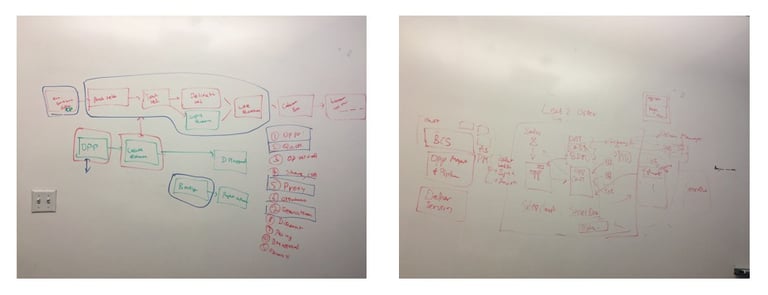
Whiteboard and Brainstroming
With the help of Product owners and other senior designer I was able to define the project goals & state the problem and put the flow in whiteboard.
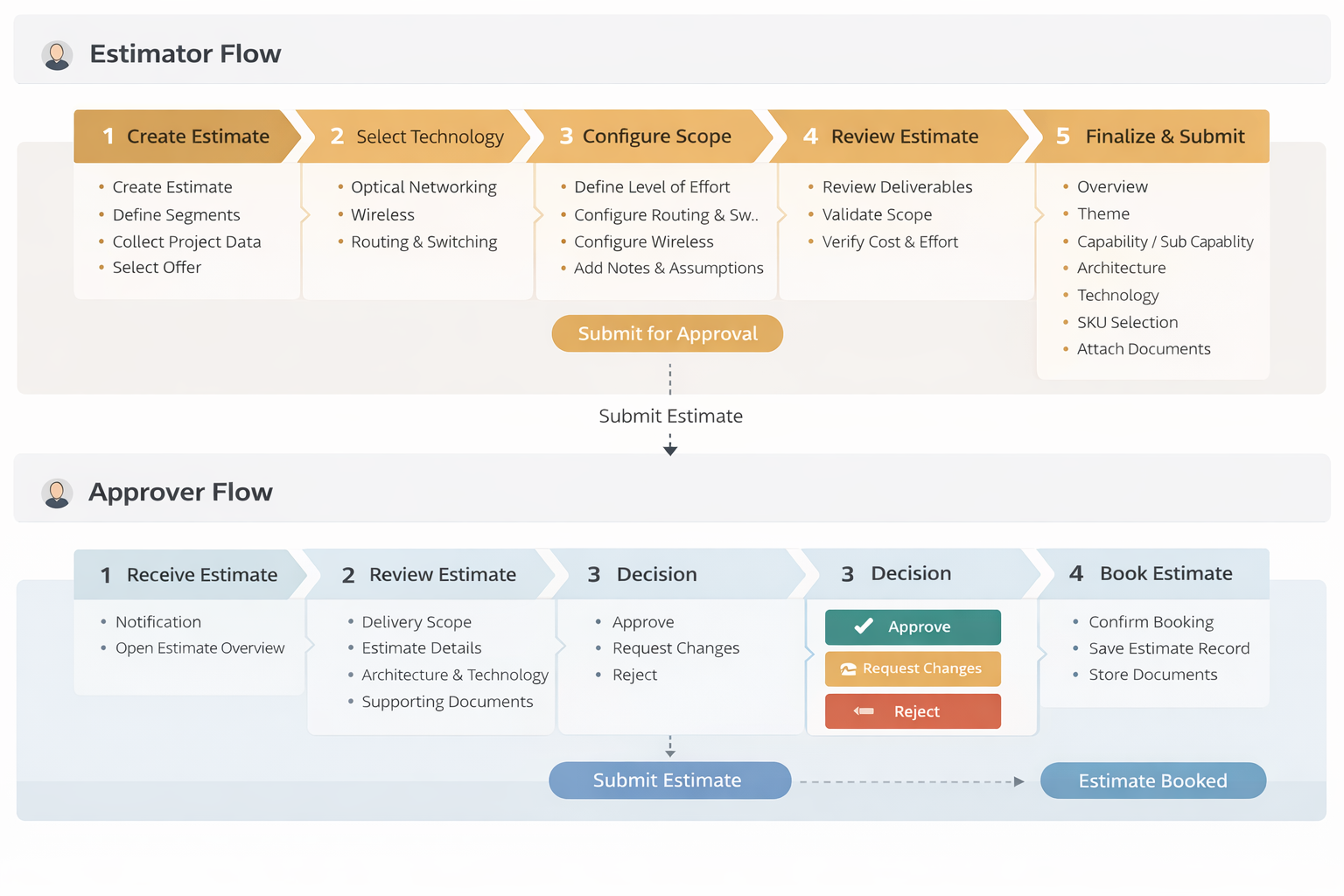
User Flow ( Holistically)
In order to improve the user experience holistically, I created a user flow chart Estimator.
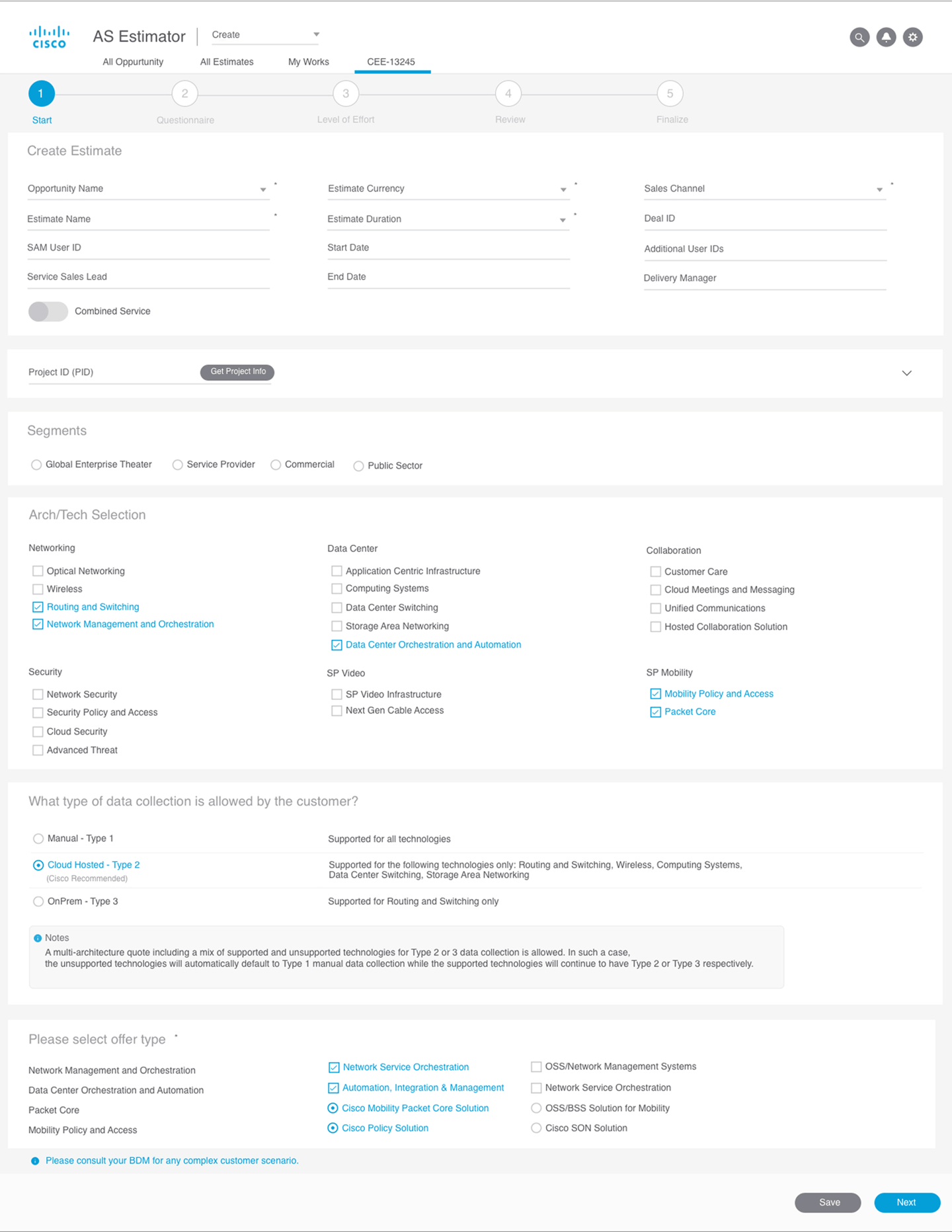
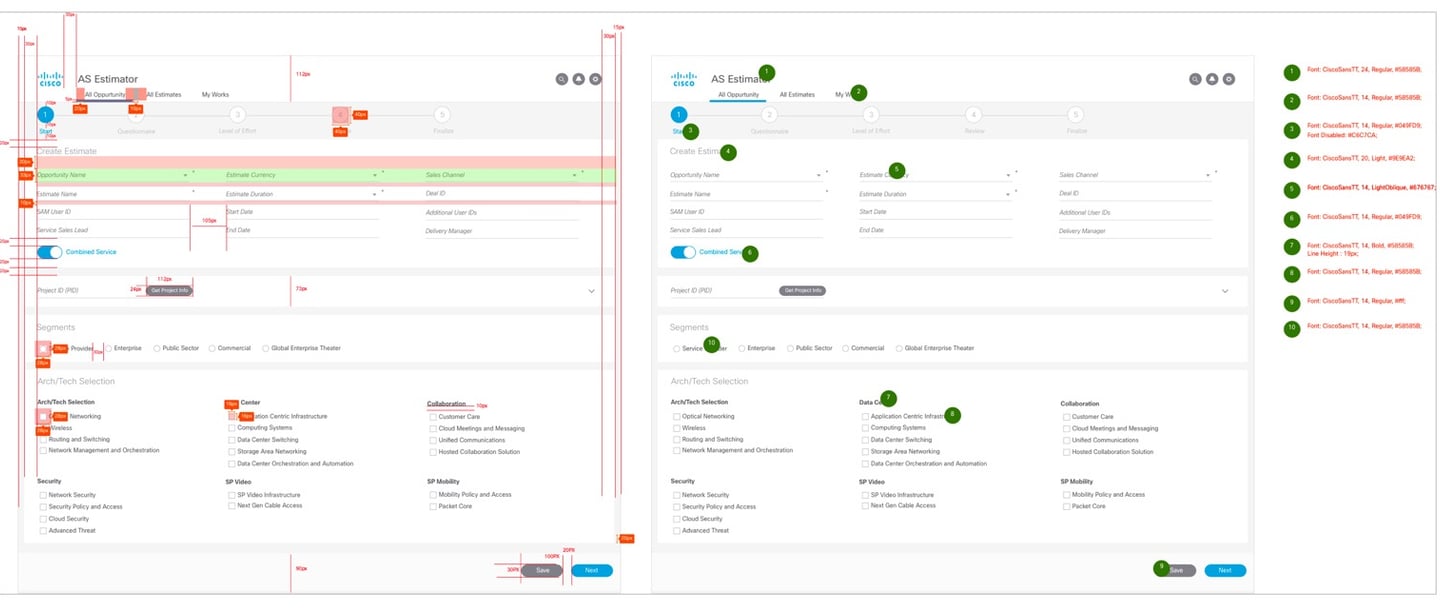
Step 1: Create Estimate
Opportunity details
Architecture / Technology selection
Data collection type
Offer selection
Service combinations
Impact: Clear foundation before complexity begins.
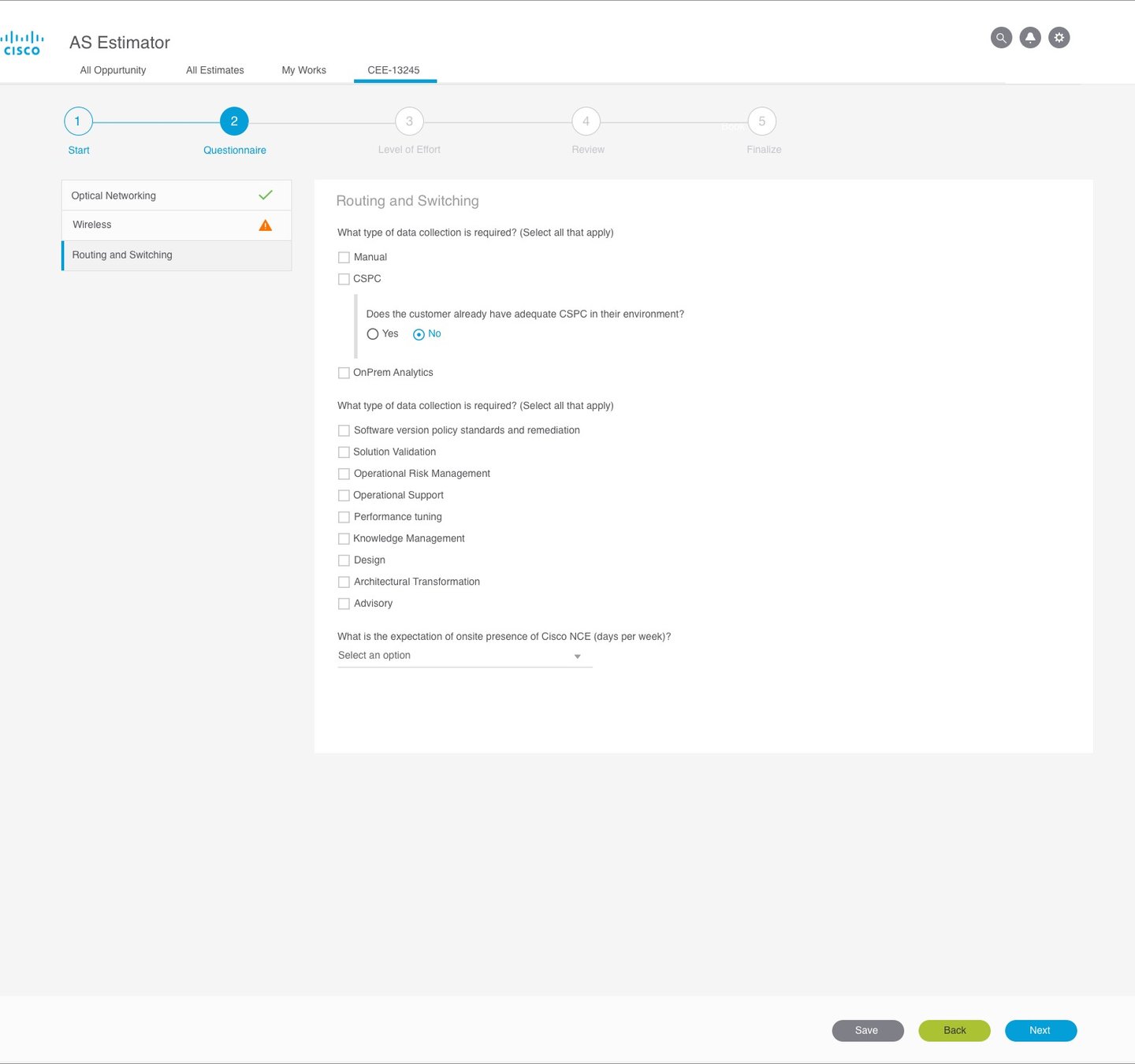
Step 2: Questionnaire
Dynamic logic-driven questions based on:
Routing & Switching
Wireless
CSPC
On-prem analytics
Operational support requirements
Impact: Prevents invalid service combinations early.
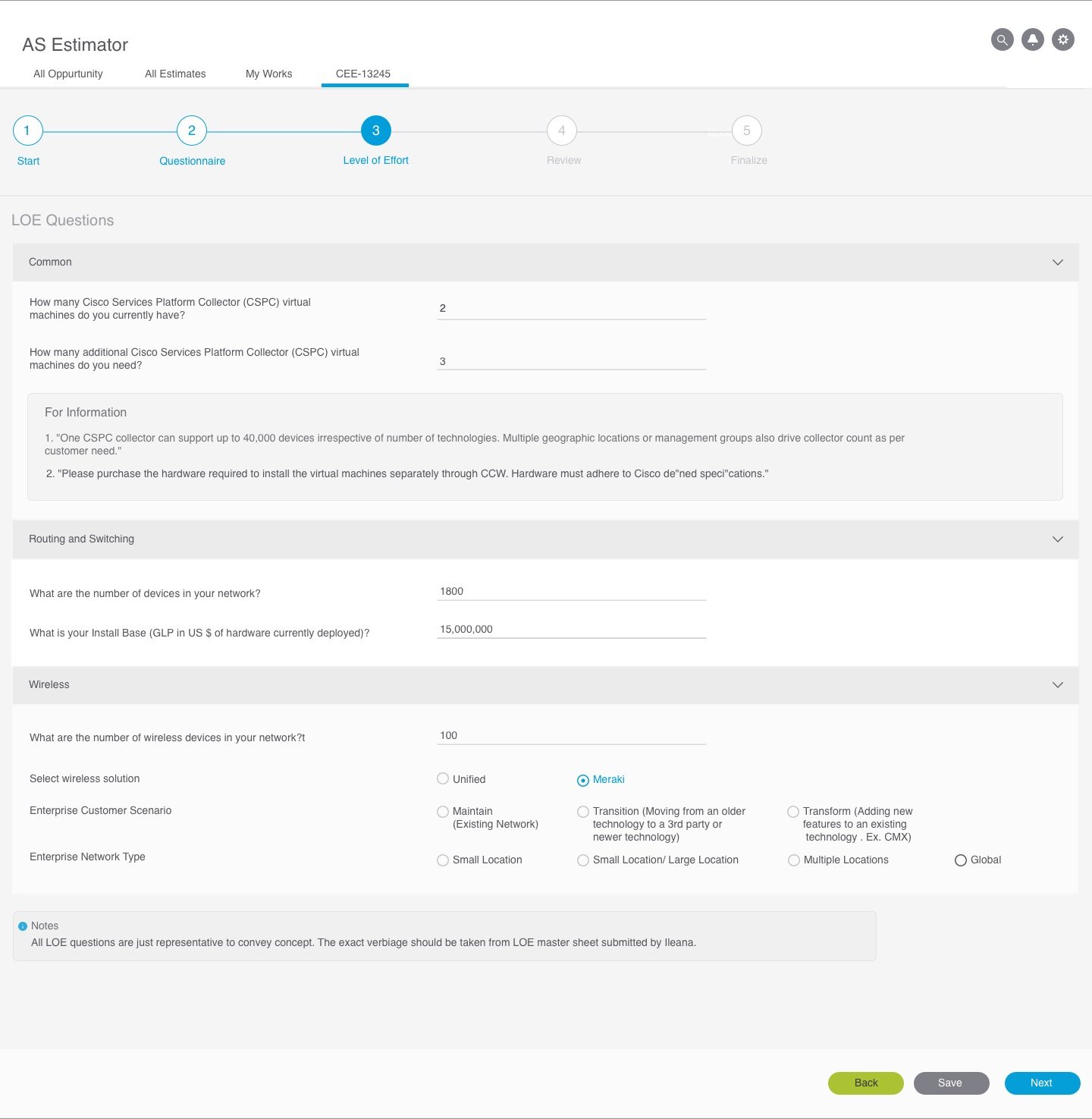
Step 3: Level of Effort (LOE)
Structured input:
Device count
Install base
Wireless solutions
Enterprise scenario type
CSPC VM count
LOE auto-calculates:
Work hours
Onsite vs remote effort
Total duration
Impact: Removes manual spreadsheet calculations
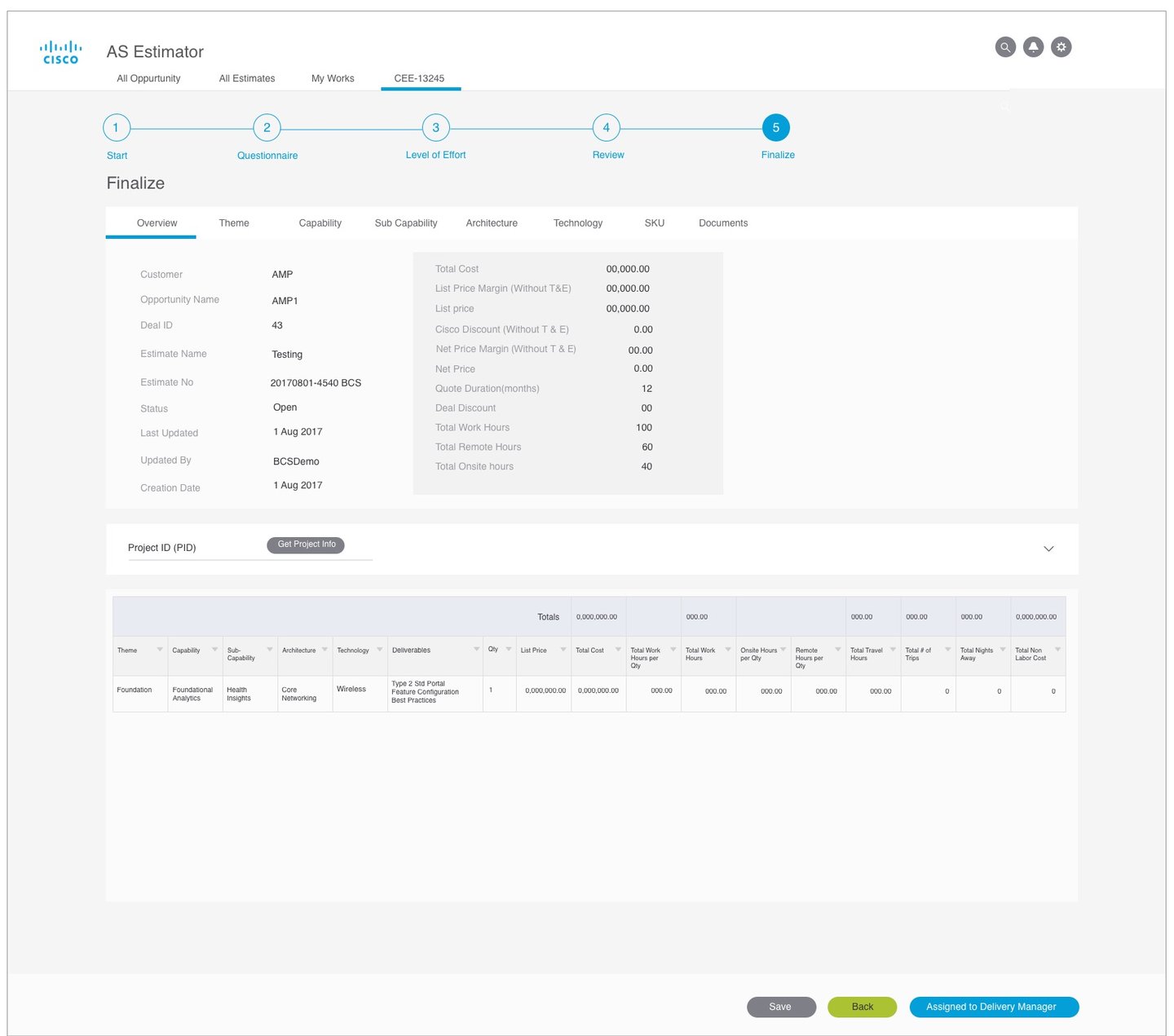
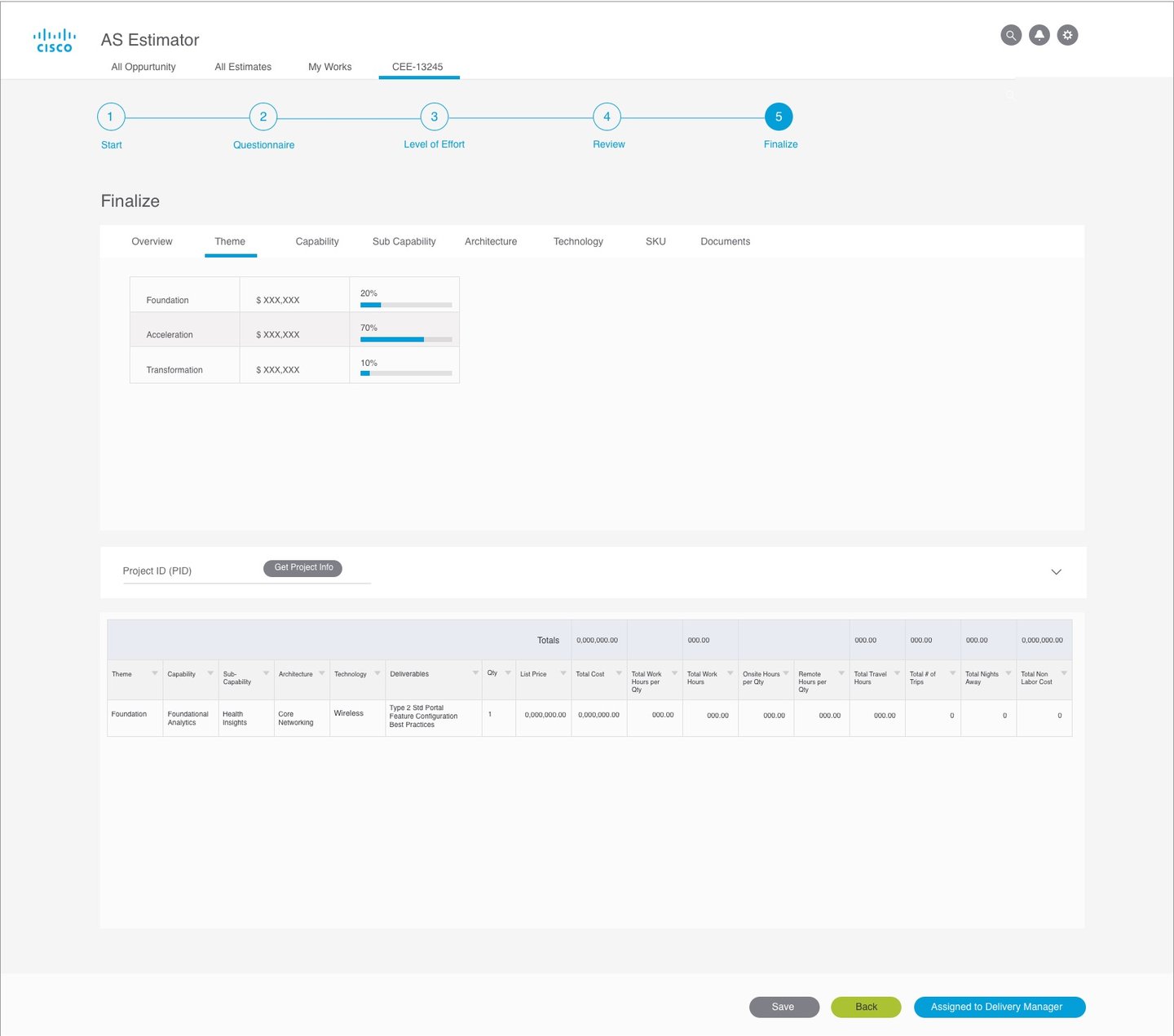
Step 5: Finalize
Tab-based summary:
Overview
Theme
Capability
Architecture
SKU
Documents
Displays:
Total cost
Margin
Work hours
Remote vs onsite split
Impact: Executive-ready summary.
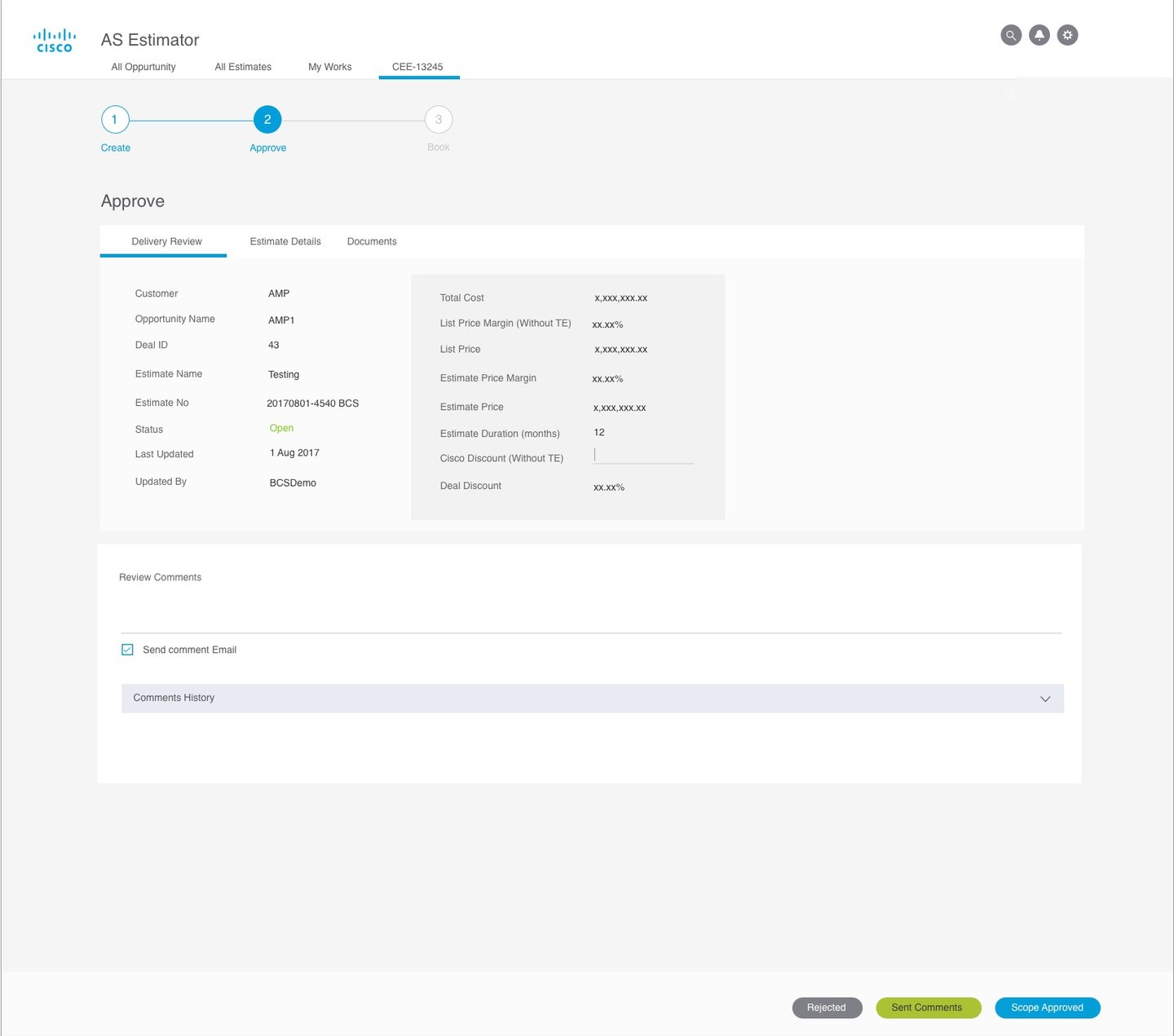
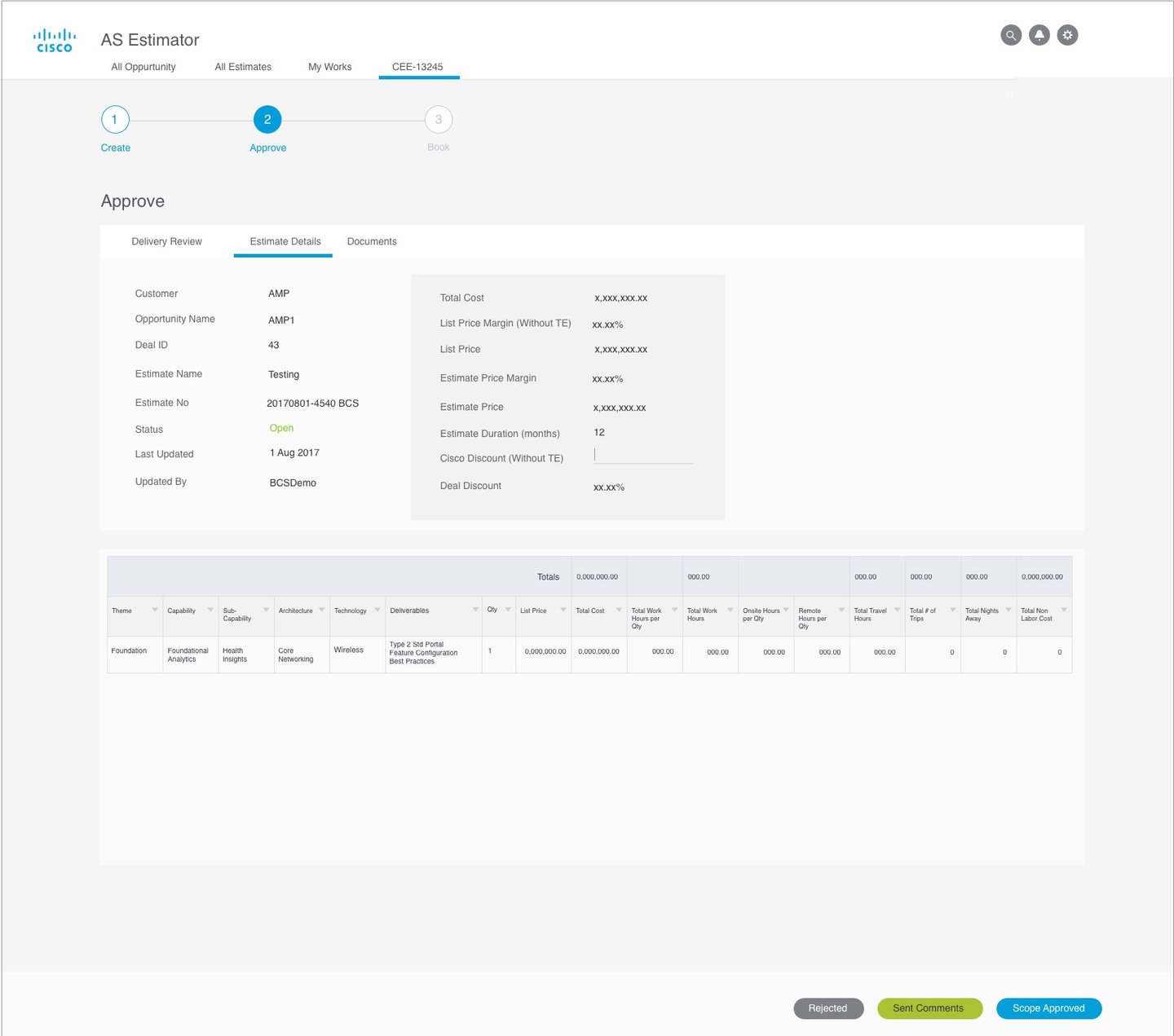
Step 6: Approval Flow
Delivery Manager can:
Review estimate details
View cost breakdown
Add comments
Approve / Reject / Send Comments
Audit trail maintained.
Impact: Governance and accountability built into workflow.
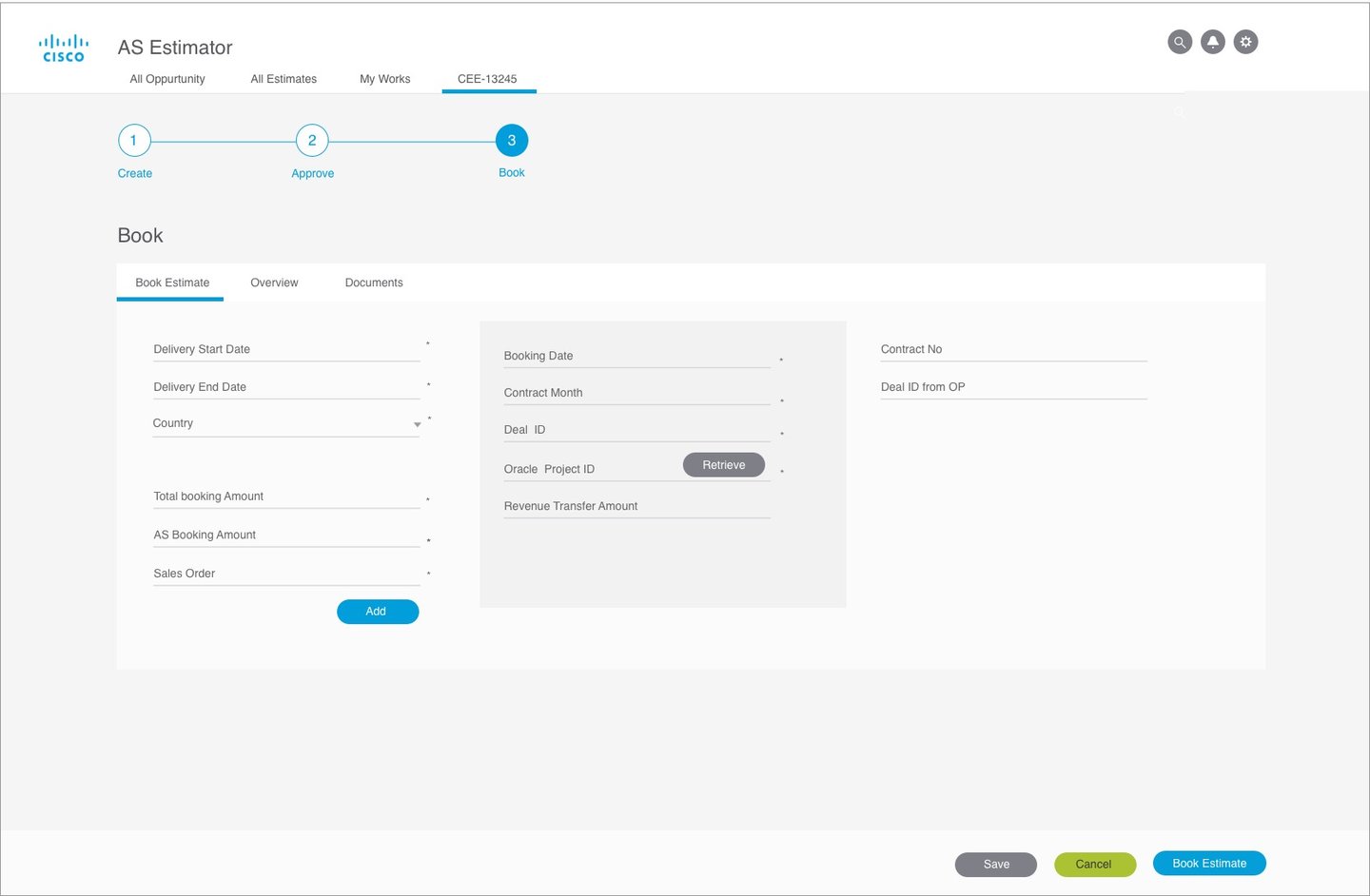
Step 7: Booking
Final booking screen collects:
Delivery dates
Booking amount
Oracle Project ID
Contract number
Revenue transfer
Impact: Smooth transition from estimation to operational execution
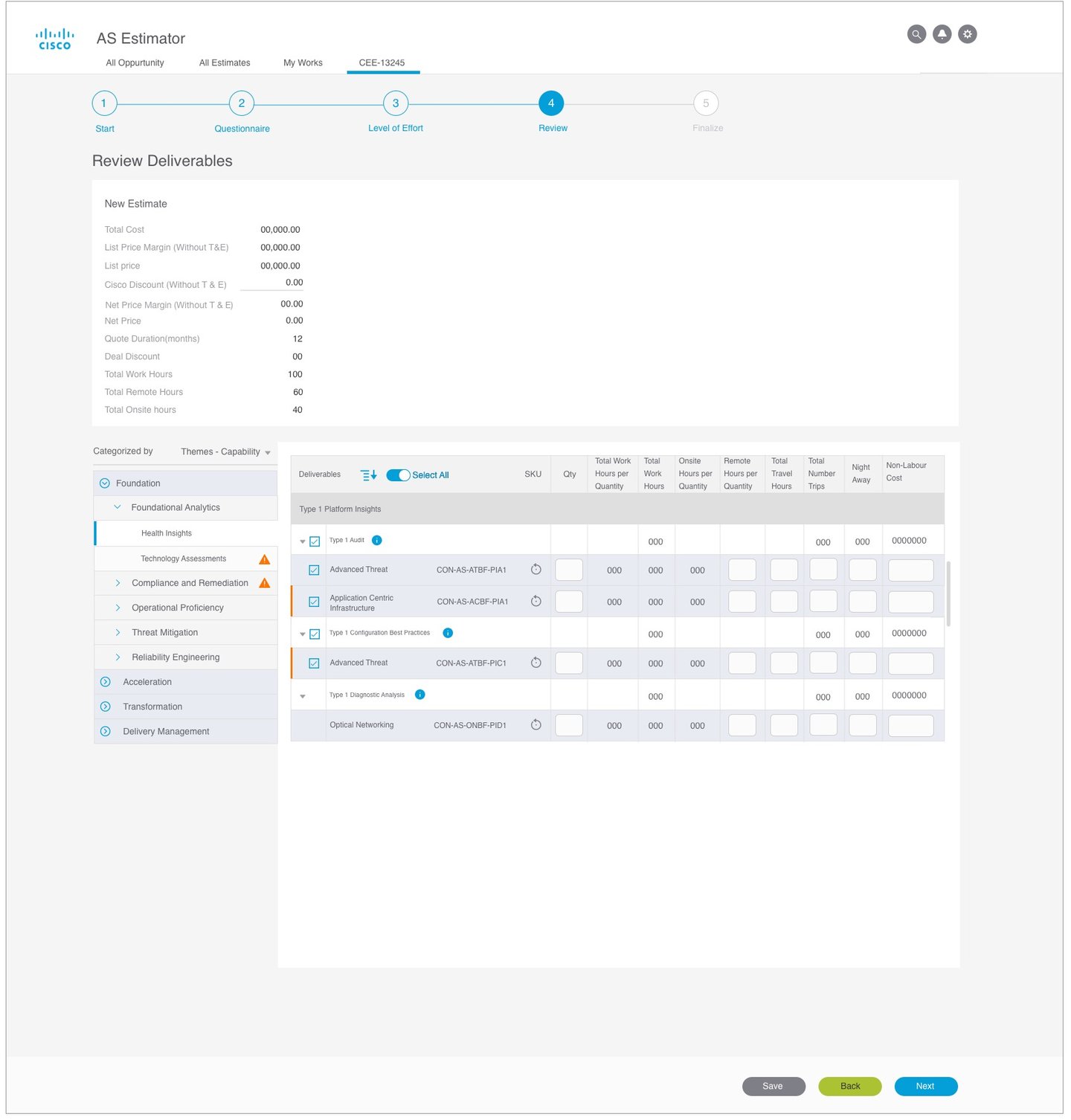
Step 4: Review Deliverables
Categorized by:
Foundation
Acceleration
Transformation
Delivery Management
Users can:
Select deliverables
Modify quantities
View cost, labor hours, travel, night shifts
Impact: Financial and operational transparency before approval.
3.DESIGN MOCKUPS
Results & Impact
While quantitative metrics are confidential, impact included:
Standardized BCS estimation workflow
Reduced dependency on manual spreadsheets
Improved accuracy in LOE calculations
Clear approval governance model
Successful implementation within Pega constraints
Established scalable foundation for future services